Kakuro is the most recent puzzle to be described by the cliché "the latest craze in Japan is now sweeping the UK." It has similarities with sudoku as far as numbers have to be slotted into rows and columns based on which numbers occupy other squares, but there is one significant difference: kakuro does involve some maths.
Take a look at kakuro.info‘s daily puzzle to see what a whole puzzle looks like.
How it works
Given a grid, the aim is to ensure that every block adds up to the number at its beginning, using the digits 1-9 a maximum of once each. The numbers in the grid below indicate that the top row must add up to 4, the second row to 7, the first column must add up to 5, the second column to 3 and the third to 4.
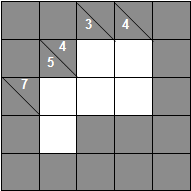
The key with kakuro is to know some of the most common patterns of numbers that add up to certain targets. For example, 3, as in the second column of the grid, can only ever be the total of two digits: 1 and 2. Just knowing this tells us that the second column has a 1 and a 2, but we don’t yet know in which order.
more…
I dropped theguardian a line yesterday and today I’m on the obituaries page!
(The odd quotation marks in the first paragraph aren’t mine although the slightly garbled first sentence of the second paragraph is.)
| Comments off
From Popbitch:
Tom Chaplin from Keane, on the train going to his parents’ house last weekend, drinking Ribena, doing the Daily Telegraph Book of Sudoku. Rock’n roll.
And where does that elusive 9 go? Somewhere only we knooooow…
| Comments off
There’s a lot been written recently about flat tax proposals. Too often flat tax options have been deliberately muddled with tax cutting. It would be possible to introduce a flat tax at a sufficiently high rate that the total income tax take remains as it is now, but many of those proposing flat taxes sneak tax cuts in at the same time, muddying the issue.
The Tory Cornerstone Group, though, are fans of tax cutting and make it clear that their flat tax would cut taxes, helping "millions of low-paid workers and pensioners."
They propose a £10,000 personal allowance and a 22% overall rate. That’s the same as the current basic rate, so let’s guess who would benefit most from this. Is it "millions of low-paid workers"? Or is it folk who currently paying top rate tax? Is it possible that those getting the greatest tax savings would be the very richest? Here’s a rough graph to give you a clue.
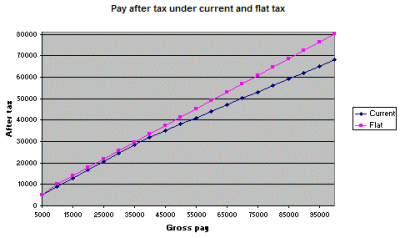
Can you tell who it is yet?


Recent comments